Why Desktop PCs Still Beat Laptops: 10 Big Reasons
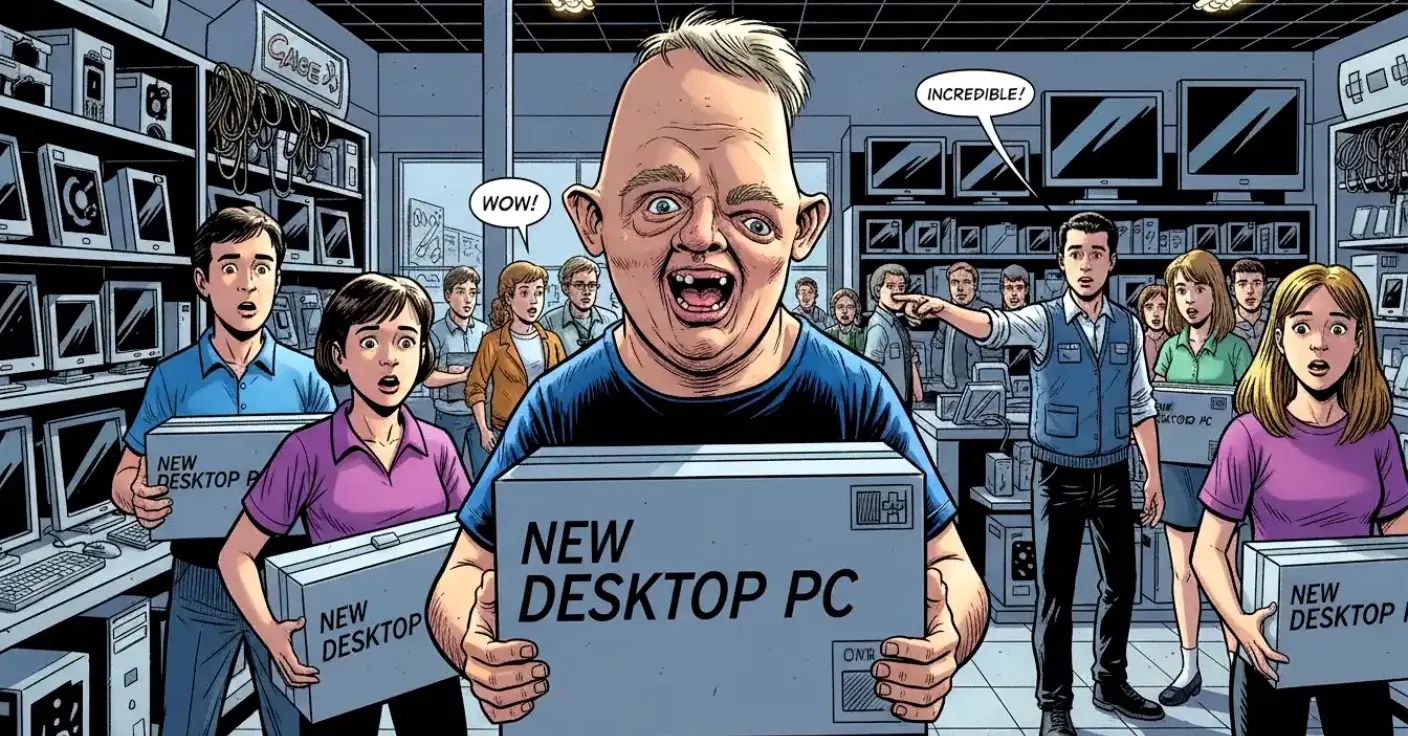
Desktop computers have spent years being treated like the unfashionable relative of the tech family — the one who doesn’t travel, doesn’t fold in half, and can’t be slipped into a backpack. Yet despite the rise of ultra‑slim laptops, feather‑light tablets and phones that cost more than a weekend in Paris, the humble desktop PC remains a powerhouse that refuses to be replaced.
In fact, modern desktops are better than ever. They’ve quietly evolved while nobody was looking: faster processors, monstrous graphics cards, whisper‑quiet cooling systems, and enough upgrade potential to keep even the most enthusiastic tinkerer entertained. If you’ve ever wondered whether desktops still have a place in the home, the answer is a resounding yes — and here’s why.
1. More Power Where It Counts
If you want raw, unapologetic computing power, a desktop PC is still the undisputed champion. Heavy workloads such as video editing, 3D rendering, AI modelling, large‑scale spreadsheets, and modern gaming all demand serious performance. Desktops deliver this effortlessly because they aren’t constrained by the size, heat, and battery limitations that plague portable devices.
Modern desktop processors now feature higher core counts, faster boost speeds and more efficient architectures. Pair that with full‑sized graphics cards — the kind that would melt a laptop chassis into a puddle — and you’ve got a machine that can handle anything you throw at it.
Laptops can be powerful, of course, but the moment you push them hard, the fans spin up like a jet engine and the battery drains faster than your will to live during a Monday meeting. A desktop simply gets on with the job.
2. Better Performance for Less Money
If you want the best value for your money, desktops win every time. A mid‑range desktop often outperforms a laptop that costs twice as much. That’s because manufacturers don’t have to cram everything into a tiny frame, engineer complex cooling systems, or use specialised low‑power components.
For the same budget, a desktop typically gives you:
- A faster processor
- A more capable graphics card
- More RAM
- Larger and faster storage
A laptop at the same price will run everyday tasks perfectly well, but when you start editing high‑resolution video or playing demanding games, it will struggle. A desktop at the same price will breeze through it.
If you’re cost‑conscious but still want performance, a desktop is the sensible choice — even if it doesn’t fit in your backpack.
3. Built to Last (and Survive Accidents)
Laptops are portable, which is wonderful until gravity gets involved. One slip, one clumsy moment, one over‑enthusiastic cat, and suddenly you’re pricing up replacement screens.
Desktops, on the other hand, sit safely on a desk, minding their own business. They’re not immune to damage, but they’re far less likely to be dropped, sat on, spilled on, or crushed in a bag. Their components are also sturdier because they don’t need to be ultra‑thin or ultra‑light.
If you want a machine that will last for years without drama, a desktop is a safe bet.
4. Choose Your Ideal Monitor, Keyboard and Mouse
Laptop touchpads are fine for quick browsing, but nobody has ever said, “I love editing spreadsheets on a tiny trackpad.” Desktops let you choose peripherals that actually suit your needs.
Want a curved ultrawide monitor? Go for it. Prefer a mechanical keyboard that sounds like a typewriter? Absolutely. Need an ergonomic mouse to save your wrist? Easy.
With a desktop, you’re not stuck with whatever screen size or keyboard layout the manufacturer decided was “good enough.” You build your workspace around your comfort, not the other way around.
5. Full Control Over Your Hardware
Buying a laptop means accepting whatever components the manufacturer has chosen. Buying a desktop means choosing exactly what goes inside your machine.
You can select your processor, graphics card, RAM, storage, cooling system, case design, and even the colour of the lights if you’re feeling fancy. If you want a custom‑built PC, you can tailor it to your exact needs — whether that’s gaming, creative work, programming, or simply having a machine that boots faster than you can blink.
And if you enjoy tinkering, desktops are a playground. Overclocking, water cooling, airflow optimisation — it’s all there for you to explore.
6. Upgrades Are Simple and Affordable
Technology moves quickly, but desktops make it easy to keep up. When you need more power, you can upgrade individual components without replacing the whole machine.
You can swap out:
- Graphics cards
- Processors (on compatible motherboards)
- RAM
- Storage drives
- Power supplies
- Cooling systems
Laptops, especially thin models, often have soldered components that can’t be upgraded at all. Even when upgrades are possible, they’re usually limited to storage and RAM.
A desktop can evolve with your needs, saving you money in the long run.
7. Massive Storage Options
Modern games, creative projects and high‑resolution media files take up a huge amount of space. A single game can exceed 100 GB, and video projects can easily reach hundreds of gigabytes.
Desktops make storage expansion effortless. You can install multiple SSDs and hard drives, giving you terabytes of space without relying on external drives dangling from USB ports.
Laptops usually have room for just one internal drive. External drives work, but they’re hardly elegant — and they certainly don’t help portability.
8. Easier to Repair and Clean
When something goes wrong with a desktop, repairs are usually straightforward. Components are accessible, replaceable and affordable. If your keyboard breaks, you replace the keyboard — not the entire top half of the machine.
Cleaning is also simple. Dust builds up in every computer, but desktops can be opened and cleaned in minutes. Laptops, on the other hand, often require special tools, delicate disassembly and nerves of steel.
A clean desktop runs cooler, quieter and longer. Maintenance is part of the charm.
9. Less Attractive to Thieves
A laptop is a thief’s dream: portable, valuable and easy to hide. A desktop is… not. It’s bulky, awkward and difficult to carry discreetly. Burglars are far more likely to grab a laptop than a full‑sized tower and a 27‑inch monitor.
If you’re worried about theft, a desktop offers a surprising amount of peace of mind simply by being inconvenient to steal.
10. Better for Long Sessions
Laptops are brilliant for quick tasks and casual browsing, but they’re not ideal for long hours of work. Poor posture, cramped keyboards and small screens all take their toll.
A desktop setup encourages proper ergonomics: a comfortable chair, a full‑sized keyboard, a mouse that fits your hand, and a monitor positioned at the right height. If you spend hours at your computer — whether for work, study or gaming — a desktop is far kinder to your body.
Your back will thank you. Your neck will thank you. Even your eyes will thank you.
Conclusion
Despite the popularity of portable devices, desktop computers remain the best choice for power, value, comfort and longevity. They’re easier to upgrade, easier to repair, and far more capable of handling demanding tasks. Whether you’re a gamer, a creative professional, a student or simply someone who wants a reliable machine that won’t overheat during a video call, a desktop PC is still a smart investment.
Portable devices may win on convenience, but desktops win everywhere else — and they’re not going anywhere.